

“The Graveyard Book” by Neil Gaiman is a coming-of-age novel about a boy, Nobody Owens, raised in a graveyard by a community of ghosts. The head of a mysterious organization targets him for assassination because he believes in a prophecy that the boy will be the agent of their destruction. This imaginative story explores the themes of community, alienation, and the joys and travails of growing up.
The novel is an homage to Rudyard Kipling’s 1894 classic, “The Jungle Book.” It features a vampire, a werewolf, ghouls, and other supernatural fauna in a matter-of-fact coexistence with modern-day reality, a feature readers of Gaiman’s novels like “American Gods” would be familiar with. The author’s treatment of the protagonist’s growing up in such strange surroundings is a sympathetic, believable, and thoroughly enjoyable fantasy adventure.
“The Graveyard Book” introduces a unique and intriguing concept of a boy, Nobody Owens, being raised by ghosts in a graveyard. To make the wild premise of a human boy raised by ethereal ghosts credible, Gaiman adds a vampire and a werewolf as guardians to aid the ghosts, which is much more believable within this context than being raised by normal humans. In this way, though the author introduces a wild plot, he grounds it by adding fantastic elements that make the story coherent.
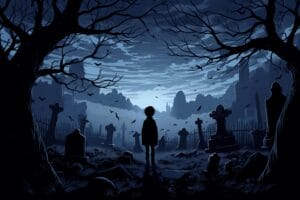
The graveyard serves as a central and atmospheric setting, providing a unique backdrop for the story. Its tombstones, crypts, and ghost inhabitants contribute to a captivating and immersive environment that adds depth to the narrative. In addition, the graveyard is not just a physical location but also carries symbolic weight. It represents the intersection between life and death and contrasts between the living world and the supernatural realm. This symbolism enhances the thematic richness of the novel. It also makes possible interactions with various supernatural beings, including ghosts, ghouls, and other fantastical creatures, that add an element of fantasy and magic to the story.
The thematic depth and symbolic richness of “The Graveyard Book” is evident, a subject Neil Gaiman handles very well in his works. He deals with the themes of identity as Bod tries to make something of his life as a living person raised by ghosts and against his dark past for a hopeful future. Bod’s struggles arouse sympathy even if they are not quite relatable. Also, the author treats other themes such as friendship, community, and belonging ably. Gaiman also addresses the interplay of life and death extensively in the novel.
The protagonist of “The Graveyard Book“, Nobody Owens (Bod), is a well-developed and relatable character with whom most readers will empathize. Bod undergoes significant character growth throughout the story, transforming from a curious and vulnerable child to becoming assertive and determined through the challenges he faces in the novel.
Each character in the novel has a unique personality and contributes to Bod’s development, creating a rich and engaging ensemble. The book introduces a variety of supernatural beings, from ghosts to ghouls, each with distinct traits, and they all interact with Bod in exciting and diverse ways. This diversity adds to the story’s fantasy and enhances the graveyard community’s richness.
From Nehemiah Trot’s flowery language to Josiah Worthington’s formal and archaic speech to the self-important, pretentious, but bad diction of the ghouls, the characters’ different speech patterns add to the novel’s color. The conversations between characters are believable, their exchanges contribute to a sense of immersion in the story, and the natural flow of dialogue enhances the overall reading experience. Humor and wit are infused in the characters’ talk, adding charm to their interactions. The clever and playful exchanges contribute to the novel’s light-hearted moments, balancing the darker themes in the narrative.
Neil Gaiman’s writing style in “The Graveyard Book” is often praised for its lyrical and descriptive qualities. The vivid language and evocative imagery contribute to a rich and immersive reading experience, allowing readers to picture the story’s atmosphere vividly. Gaiman maintains a smooth and engaging narrative flow throughout the novel. The pacing is well-managed and creates a balance between moments of tension and moments of reflection. Gaiman skillfully blends dark and light elements in his writing, and the story’s dark exploration of death, set in a graveyard, is complemented by moments of warmth, humor, and friendship. This tonal balance enhances the overall emotional impact of the narrative.
One of the standout features of “The Graveyard Book” is its thrilling plot: a baby raised by ghosts and a vampire in a graveyard after his family is murdered. From the beginning, the narrative grips readers with its suspenseful and intriguing premise, and its progress is fast-paced and filled with twists and turns. Additionally, the novel boasts a fascinating cast of characters that enrich the story. Bod himself is a compelling protagonist whose curiosity and bravery drive the narrative. The ghosts, Silas, Bod’s vampire guardian, and Miss Lupescu, his stern yet caring werewolf tutor, add an exotic charm to the tale. Bod’s interactions with these characters provide both humor and emotional resonance. The book is notable for its profound treatment of themes. Gaiman explores life and death, identity, and belonging with sensitivity and insight. In Neil Gaiman’s exploration, Bod’s journey is not just about survival but also about self-discovery and finding his place in the world and the graveyard. In contrast, a place of death becomes a symbol of safety and community for Bod.
Despite its many strengths, its derivative storyline can be a turnoff. The plot’s resemblance to Rudyard Kipling’s “The Jungle Book ” felt a little too on-the-nose, with Bod’s upbringing by ghosts paralleling Mowgli’s upbringing by a wolf pack. Even though Gaiman adds his unique twist and setting to the tale, the similarities detract from the novel’s novelty and dramatic impact. Also, Gaiman develops very few characters. While Bod and perhaps Mrs. Lepescu receive significant attention and growth, the other characters in the novel are one-dimensional. The ghosts of the graveyard, though interesting, are no more than background figures. Finally, most of the story of “The Graveyard Book“ is confined to the graveyard. After dwelling in the graveyard alone for a while, it becomes claustrophobic. Perhaps this is the much the novel’s plot could allow, but a story told in a more diverse setting or with more extensive world-building might be more enjoyable.
“The Graveyard Book” impacts readers by exploring identity, belonging, and accepting life’s inevitable transitions uniquely. Through the upbringing of its protagonist, Bod, in a graveyard, the story treats the complexities of life and death in a way that teaches readers about inner strength, the importance of family—whether biological or chosen—and the courage to step into the unknown. The novel encourages readers to embrace the uncertainties of life and cherish the connections that shape who they are, ultimately highlighting the journey of growing up and finding one’s place in the world.
The Graveyard Book: A Gothic Fantasy Retelling of Kipling’s ‘The Jungle Book’
Book Title: The Graveyard Book
Book Description: ‘The Graveyard Book’ by Neil Gaiman is a coming-of-age novel about a boy, Nobody Owens, raised in a graveyard by a community of ghosts. This imaginative story explores the themes of community, alienation, and the joys and travails of growing up.
Book Author: Neil Gaiman
Book Edition: First Bloomsbury Edition
Book Format: Paperback
Publisher - Organization: Bloomsbury
Date published: October 1, 2009
Illustrator: Chris Riddell
ISBN: 9780747594802
Number Of Pages: 295
-
Plot
-
Setting
-
Characters
-
Writing Style
-
Dialogue
-
Lasting Effect on Reader
The Graveyard Book Review
In ‘The Graveyard Book,’ Gaiman retells Kipling’s classic tale ‘The Jungle Book’ in a darker, evocative, and more existentially resonant fantasy.
Pros
- thrilling plot
- a fascinating cast
- profound treatment of themes
Cons
- derivative storyline
- very few characters are developed
- limited setting